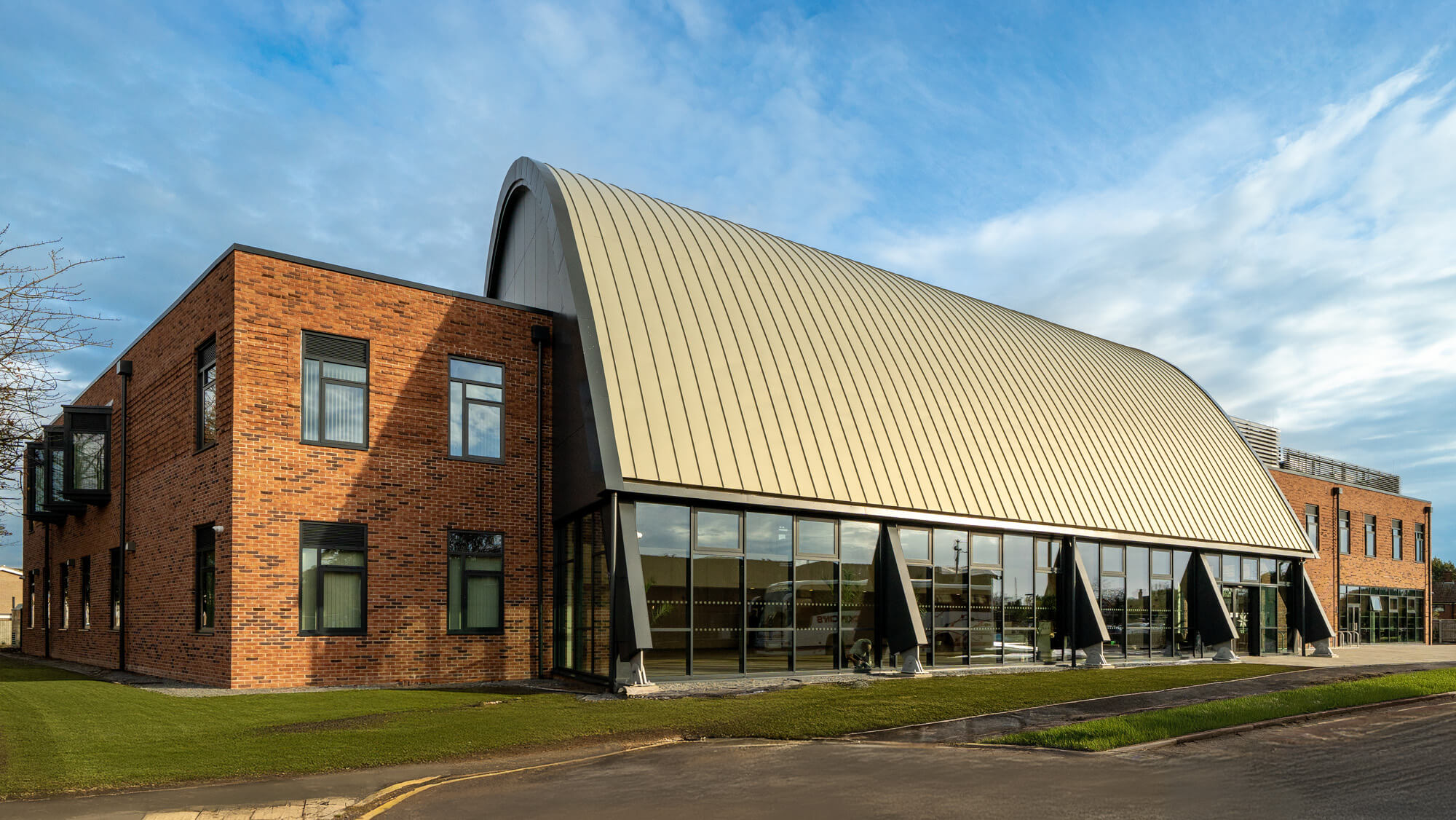
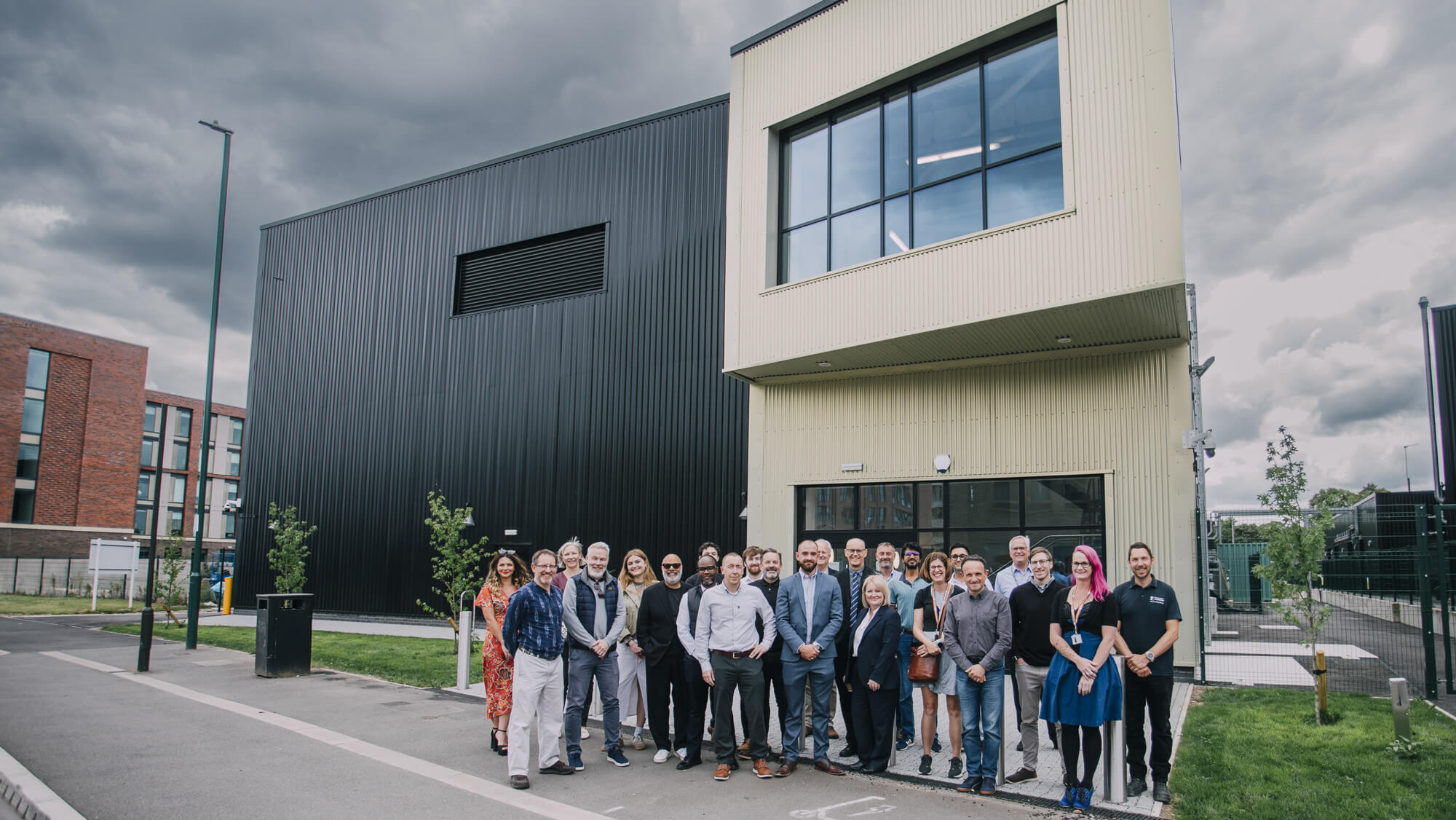
Appointed as lead designer, architect and principal designer, YMD Boon is proud to have played a key role in the design and delivery of the now-completed Hybrid Propulsion Systems Building.
Designed to support the development, integration and testing of next-generation propulsion systems, the Hybrid Propulsion Systems Building provides researchers and industry partners with a flexible platform to develop components and subsystems at meaningful power levels, connect them into integrated systems, and evaluate them under representative operating conditions.
The facility represents a major step forward for the UK’s clean propulsion sector and strengthens the UK’s capability to develop and test electrification and hybrid propulsion technologies.
The facility addresses one of the UK’s biggest challenges in clean propulsion innovation: bridging the gap between pioneering research and real-world application. By enabling technologies to be developed, integrated and tested at meaningful scale, it will support innovation across aerospace, automotive, marine, rail, heavy-duty transport and power generation.
The building forms a key part of the University’s growing Zero Carbon Cluster and is connected to the adjacent Power Electronics and Machines Centre (PEMC), creating one of the UK’s most advanced ecosystems for clean propulsion research.
At its heart is a cryogenic research platform centred on a five-megawatt dynamometer, supported by high-power electrical infrastructure and advanced cooling systems. This will enable research into superconducting, hyperconducting and other cryogenically cooled electrical machines, power electronics and power systems.
Among its first programmes will be H2FlyGHT, an Aerospace Technology Institute-supported programme led by GKN Aerospace to develop megawatt-class cryogenic hydrogen-electric propulsion technology.
The project was supported by more than £70 million of public and private investment from Research England, the Engineering and Physical Sciences Research Council (EPSRC), East Midlands Freeport, the University of Nottingham and a range of industry partners.
The project further demonstrates YMD Boon’s expertise in delivering technically complex higher education and research facilities. Through its appointment on the University of Nottingham Framework, the practice continues to support the University’s ambitious estate strategy by designing buildings that enable world-leading teaching, research and innovation.
Find out more about the Hybrid Propulsion Systems Building here.
Shari Setayesh, Director & Architect at YMD Boon, said:
“We are incredibly proud to have supported the University of Nottingham in delivering this exceptional research facility. Our team worked closely with the wider project team to create a highly technical building that will provide researchers and industry with a unique platform to develop cleaner propulsion technologies. It has been a privilege to contribute to a project that supports innovation and plays an important role in the transition towards net zero.”
Professor Chris Gerada, Director of the Zero Carbon Cluster, University of Nottingham, said:
“The difficult step is moving from a promising laboratory result to representative hardware that can be manufactured, connected and tested at meaningful power. This building provides that missing platform, helping reduce development risk and retain expertise, intellectual property and future industrial activity in the UK.”
Professor Dame Jessica Corner, Executive Chair of Research England, said:
“The UK has outstanding research in advanced propulsion, but turning new ideas into technologies for industry needs specialist facilities at meaningful scale. Research England’s investment through the UK Research Partnership Investment Fund in the new Hybrid Propulsion Systems Building will translate important research into commercial opportunity. It will not only strengthen a world-leading capability, but the co-investment with industry in research excellence will drive economic growth in the region and beyond.”
Professor Jane Norman, President and Vice-Chancellor of the University of Nottingham, said:
“The transition to cleaner and more capable transport and power systems represents a major industrial opportunity for the UK. By combining research excellence with the infrastructure needed to develop technologies at scale, we can help turn new ideas into practical systems, attract investment and support highly skilled jobs in the East Midlands and across the country.”